

Key Messages and Features
The Institute of Developing Economies Library (IDE Library) is a special library that serves as a key resource for research on emerging and developing regions.
The library’s mission is to be widely accessible to the public, supporting researchers and learners in Japan and around the world in their information needs while accumulating, sharing, and preserving knowledge about emerging and developing regions.
The library is open to anyone after a simple registration process.
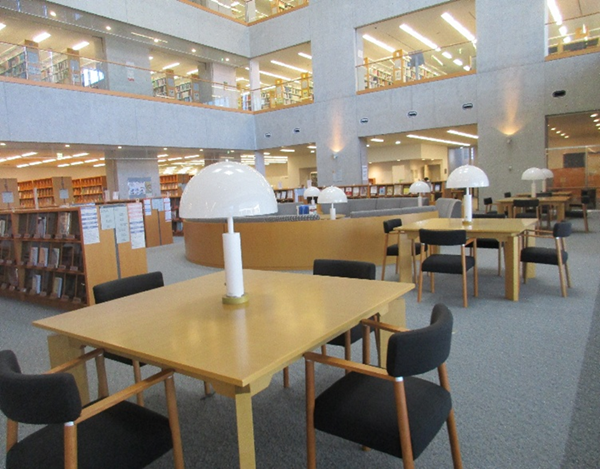
First-Floor Reading Area
IDE Library’s Mission and Guiding Principles
"Connecting the World through Knowledge of Developing Regions."
Curating Knowledge
- We select materials with future research needs in mind.
- We do more than simply store materials—we identify, curate, and provide access to knowledge that matters.
Preserving and Passing on Knowledge
- We serve as an archive that preserves knowledge and supports long-term research.
- We protect valuable materials at risk of being lost due to natural disasters, conflict, or limited resources, and return them to local communities to help preserve them for future generations.
- We use institutional repositories to share research findings and data, helping to advance open research.
Connecting Knowledge
- We serve as a hub for the global sharing of knowledge.
- We collaborate with partner institutions to advance the digitization of collections and create new ways of accessing and using information by integrating physical and digital resources.
- We expand our networks with researchers, academic societies, and libraries in Japan and around the world, while strengthening our English-language outreach to foster international research collaboration and knowledge exchange.
Features of the IDE Library
Creating Knowledge Hubs with Subject Librarians
At the IDE Library, Subject Librarians with expertise in regional studies work with a Systems Librarian who builds the information infrastructure. Together, they help the library serve as a center for research and knowledge sharing.
The Subject Librarians (13 librarians as of 2026) specialize in the Chinese-speaking regions, the Korean Peninsula, Southeast Asia, South Asia, Central Asia, the Middle East and North Africa, Africa, Latin America, and Oceania. They possess deep knowledge of the societies and languages of these regions. In addition to selecting and acquiring primary sources and scholarly publications related to the politics, economics, and societies of each region, they conduct field research and collect materials firsthand, helping to build collections grounded in local contexts. They also support research by drawing on their expertise to provide researchers and other users with relevant materials and information in response to inquiries from within and outside the Institute. They also share their expertise through writing, lectures, and exhibitions, while creating bibliographic records for multilingual materials, including those in Asian and African languages.
The Systems Librarian (one as of 2026) develops and maintains library information systems and digital archives, while supporting the dissemination of research through the institutional repository. In doing so, the Systems Librarian helps build the infrastructure that provides access to research resources. Drawing on specialized knowledge and technical expertise, the Systems Librarian helps ensure that knowledge remains accessible, shareable, and preserved for future generations.
[Read More] ライブラリアン・インタビュー Librarian Interview (in Japanese)
[Watch the Video] 70万冊の知識を未来へ!アジア経済研究所図書館 Passing on 700,000 Volumes of Knowledge to the Future: The IDE Library (Marie Kobayashi) (in Japanese)
Collection Development
Since its establishment, the IDE Library has focused on collecting primary materials published locally in regions such as Asia, the Middle East, Africa, and Latin America, including government publications, statistical publications, journals, newspapers, and research reports.
In addition to purchasing materials directly from bookstores and government agencies in the countries and regions concerned, we expand our collection through exchange programs with overseas research institutions and government agencies. Librarians and researchers also conduct field research and collect materials firsthand, drawing on a wide range of networks to strengthen our holdings.
Thanks to more than 60 years of systematic and continuous collection development, the library has built one of the world's most distinctive collections of materials from developing regions. Because we have focused on countries and regions where the infrastructure for publishing and preserving materials is fragile, the collection includes valuable resources that no longer exist even in their countries of origin because of conflict or disaster. These materials also provide a valuable historical record for understanding social and economic change over time in different parts of the world.
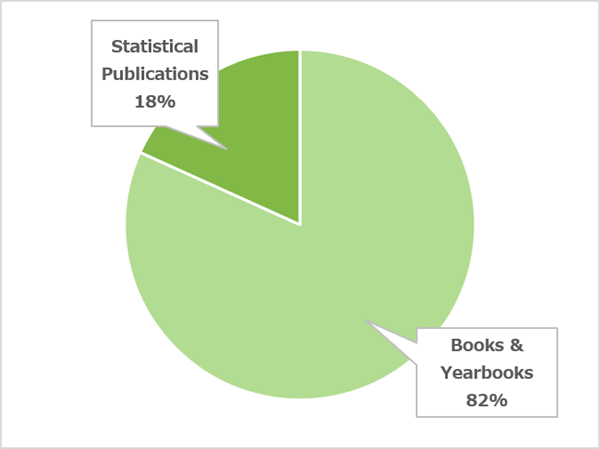
At the end of FY2024, the library's collection totaled approximately 794,000 items. Holdings by material type are shown in Table 1. Comparing general books (including yearbooks) and statistical publications in the overall collection, statistical publications account for 18% of the collection (Figure 1). This reflects the library's long-standing focus on collecting statistical publications.
Table 1. Library Holdings by Material Type (Approximate Figures, End of FY2024)
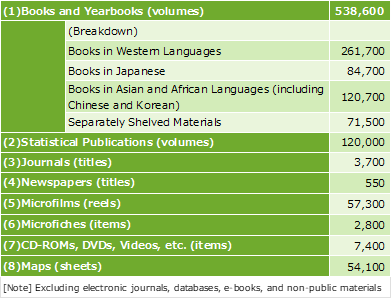
Figure 1. Composition of Books and Yearbooks vs. Statistical Publications
[Read More] 統計資料の構築 -- 他のコレクションとの相違点 (特集 アジ研図書館五十年の足跡と未来 -- 蔵書構築・情報発信の課題) Developing a Statistical Collection: How We Differ from Other Collections (Special Feature: The 50-Year History and Future of the IDE Library: Challenges in Collection Development and Information Dissemination) (Shigeru Higashikawa) (in Japanese)
[Watch the Video] 【研究紹介(ライブラリアン編)】クルド人の民族意識と図書館の役割 [Research Introduction (Librarian Edition)] Kurdish Ethnic Identity and the Role of Libraries (Miki Nose) (in Japanese)
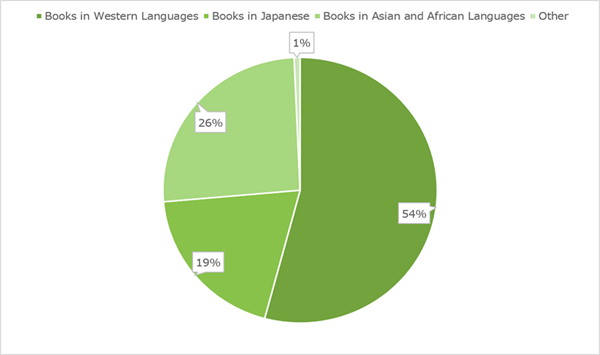
Figure 2 shows the language composition of the library's collection. Books in Western languages account for the largest share of the collection at 54% and include English, French, Spanish, Portuguese, and other languages. Furthermore, books in Asian and African languages account for 26% of the collection, including Chinese, Korean, Arabic, Thai, Indonesian, Turkish, Burmese, and many others. By contrast, books in Japanese account for only 19% of the collection. With foreign-language materials making up approximately 80% of total holdings, the library's collection contains far more materials in foreign languages than in Japanese.
Figure 2. Language Composition of the Library Collection
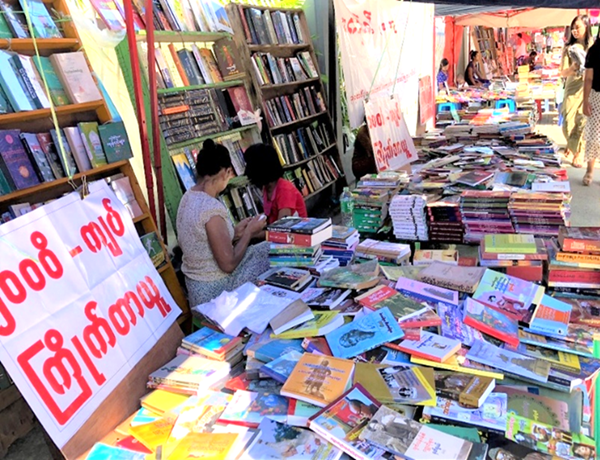
Collecting Myanmar-language Materials at a Street Book Market in Yangon, Myanmar (2019)
[Read More] 多言語資料収集五十年 (特集 アジ研図書館五十年の足跡と未来 -- 蔵書構築・情報発信の課題) Fifty Years of Collection Development in Asian and African Languages (Special Feature: The 50-Year History and Future of the IDE Library: Challenges in Collection Development and Information Dissemination) (Michiko Ishii) (in Japanese)
Enhancing Access to Scholarly Information
Bibliographic Control and Information Access
The IDE Library prepares bibliographic records for all multilingual materials and locally published resources acquired from diverse regions, including Asia, the Middle East, Africa, and Latin America. To make bibliographic information for non-Roman scripts, such as Chinese, Korean, Arabic, Thai, and Burmese, searchable through the Online Public Access Catalog (OPAC), we also input data in the original scripts. Another distinctive service provided by the IDE Library is the creation of its own article indexes. Many journals from developing regions are not included in commercial databases. The IDE Library creates article-level indexes, making them searchable through the OPAC.
- 雑誌記事索引採録対象誌一覧(2025年度)Journals Included in the Article Index (Fiscal Year 2025)(in Japanese)
- In the past, we have also published annotated bibliographies and a range of catalogues. By selecting important research and providing summaries of their content, annotated bibliographies do more than simply organize information—they also help readers find relevant sources and support the early stages of research.
- 文献解題・目録類 Annotated Bibliographies and Catalogs (in Japanese)
- The IDE Library also participates in NACSIS-CAT, a nationwide comprehensive catalog and location database. By registering with NACSIS-CAT, the bibliographic data of the IDE Library is shared with university libraries and other institutions across Japan and is widely accessible to users of other libraries through CiNii Books. Furthermore, participation allows the bibliographic data created by the IDE Library for multilingual materials and local resources to be shared more widely, thereby strengthening the information infrastructure for regional studies both domestically and internationally.
[Read More] 目録所在情報サービス(NACSIS-CAT/ILL)への参加 (特集 アジ研図書館五十年の足跡と未来 -- 蔵書構築・情報発信の課題) Participation in the Catalog Information Service (NACSIS-CAT/ILL) (Special Feature: The 50-Year History and Future of the IDE Library: Challenges in Collection Development and Information Dissemination) (Erika Ito) (in Japanese)
Dissemination of Research Findings: Institutional Repository (ARRIDE)
Academic Research Repository at the Institute of Developing Economies (ARRIDE) is a platform that systematically collects, preserves, and provides full-text access to IDE's publications. In accordance with the Institute's Open Access Policy, ARRIDE allows free online access to the Institute's publications.
Users can search for and access the full text of scholarly articles published in the IDE’s Japanese-language journal 『アジア経済』(Ajia Keizai, Asian Economy) and its English-language journal The Developing Economies, as well as articles from periodicals including『アジア動向年報』(Asian Affairs Annual Report), 『アフリカレポート』(Africa Report), and 『ラテンアメリカレポート』(Latin America Report) (all in Japanese). In addition, full-text access is available to monographs published by the Institute for such series as IDE eBooks, the IDE Research Series, アジ研選書 (Ajiken Sensho, an IDE book series) and 情勢分析レポート (Josei Bunseki Report, a series of current affairs analysis reports) (all in Japanese).
[Read More] 定期刊行物の電子出版 : アジア経済研究所の事例 Electronic Publishing of Periodicals: The Case of the Institute of Developing Economies (Mayumi Kishi) (in Japanese)
Digital Access to Library Materials: Digital Archives
At the IDE Library Digital Archives, we digitize and make available valuable materials from the library’s collections.
- 「近現代アジアのなかの日本」(Japan in Modern and Contemporary Asia) (in Japanese) provides access to materials published locally by Japanese organizations active in Asian countries before and during World War II, as well as prewar naval documents, materials of the Showa Research Association, and records relating to the Southern Regions Military Administration. Among these collections are the Yamazaki Motoki Papers, business records of the South Manchuria Railway Company preserved by Motoki Yamazaki, its last president. Digital images of these materials are also available through the Japan Center for Asian Historical Records (JACAR) database.
- Passing on “the Japanese Experience”makes available publications from the project “Technology Transfer, Transformation, and Development: The Japanese Experience,” which was commissioned by the United Nations University under its Human and Social Development Programme.
- 「開発途上国のフォトアーカイブス」(Photo Archives of Developing Countries)(in Japanese) provides digital access to slide photographs taken by IDE staff during research trips to developing regions. These images were originally created as part of field research and have since been digitized and made publicly available.
[Read More] 『e-Japan戦略II』に呼応したデジタルアーカイブの構築 (特集 アジ研図書館五十年の足跡と未来 -- 蔵書構築・情報発信の課題) Building Digital Archives in Response to the 'e-Japan Strategy II' (Special Feature: The 50-Year History and Future of the IDE Library: Challenges in Collection Development and Information Dissemination) (Kumiko Izumisawa) (in Japanese)
Outreach Activities
As a special library for research on developing regions, the IDE Library shares its accumulated expertise with a broader audience through a variety of outreach activities including columns, exhibitions, and other initiatives.
Sharing Library Information through Columns
On the IDE Library's website, 「ライブラリアン・コラム」(Librarian’s Column)(in Japanese) provides a platform where our librarians can share their expertise on a wide range of topics such as daily operations, libraries and bookstores overseas, and field research.
Additionally, 「アジ研図書館とわたし」(The IDE Library and Me)(in Japanese) features contributions from researchers and library users sharing their recommended materials, unexpected encounters in the library’s collections, and the stories and challenges behind their efforts to collect research materials. This column highlights the depth and richness of the collection that librarians and researchers have built together since the founding of IDE Library.
[Read More] アジア経済研究所と図書館の情報発信― webサイトとSNSを中心に― Information Dissemination by the IDE and IDE Library: Focusing on Websites and Social Media (Michitaka Imamitsu) (in Japanese)
Library Exhibitions
Library exhibitions play an important role in fostering a deeper understanding of developing regions by showcasing materials from the IDE Library’s collection.
In FY2025, the IDE Library held the exhibition 「中東の紛争を知るために―パレスチナ、イスラエル、レバノン、シリアの政治と社会」(Understanding Conflicts in the Middle East: Politics and Society in Palestine, Israel, Lebanon, and Syria)(in Japanese). Drawing on one of the country’s leading collections on the Middle East, the exhibition featured approximately 200 items related to the region’s politics and society. It offered visitors an opportunity to deepen their interest in and understanding of the history, society, and culture underlying the conflicts.
In FY2024, we held the exhibition 「東南アジア 激動の時代の雑誌展」(Journals from Turbulent Times in Southeast Asia) in collaboration with the Library of the Kyoto University Center for Southeast Asian Studies. This exhibition introduced Thai-language commentary magazines and Indonesian Islamic magazines from the 1970s–1980s, accompanied by explanatory notes.
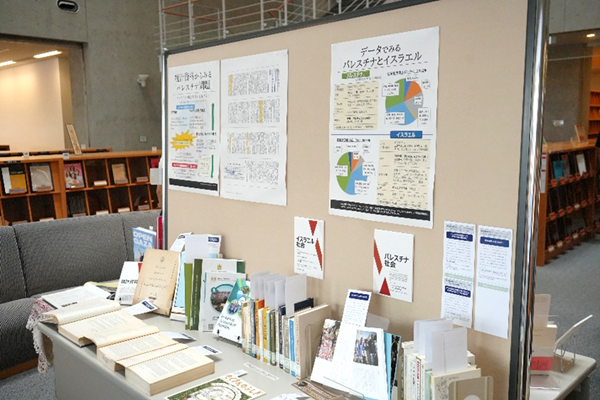
FY2025 Special Exhibition: Understanding Conflicts in the Middle East
- 図書館イベント情報はこちら Library event information can be found here (in Japanese).
[Read More] 資料展『中東の紛争を知るために―パレスチナ、イスラエル、レバノン、シリアの政治と社会―』を終えてReflections on the Exhibition "Understanding Conflicts in the Middle East: Politics and Society in Palestine, Israel, Lebanon, and Syria" (Rie Takahashi) (in Japanese)
Collaboration with Partner Institutions
The IDE Library works closely with a variety of institutions to strengthen its function as a specialized library supporting research on developing regions.
Cooperative Library Usage Program
「図書館共同利用制度」(Cooperative Library Usage Program) (in Japanese) was established to enable broader utilization of the IDE Library's materials as public resources for research on developing regions. Under this system, members of universities and research institutions that have signed mutual use agreements with the IDE Library can access services, including personal borrowing.
The IDE Library has cooperation agreements with 18 institutions (as of FY2025) including Ochanomizu University, the University of Osaka, Kyoto University, Tokyo University of Foreign Studies, Hitotsubashi University, and Waseda University. Affiliated student, faculty, and staff can obtain a library card and borrow general books up to 30 days and statistical publications up to 14 days.
アジア情報研修(Asian Information Workshop)
「アジア情報研修」(Asian Information Workshop) (in Japanese) is a training program organized by the National Diet Library (NDL) aimed at librarians, researchers, and others involved in the collection and use of Asian materials and information. It provides a systematic introduction to research methods and the effective use of information sources relating to Asia. It has been held annually since 2002, and since 2015, it has been conducted jointly with our library.
The program covers information sources on the politics, economy, and society of various regions of Asia, as well as statistical publications, digital archives, and documents from international organizations. Hands-on exercises help participants develop practical research skills and master using these resources effectively. Additionally, each fiscal year has a specific theme. In FY2025, the theme was 「西アジアを調べる―国際機関の文書と現地の統計から紛争をみる―」(Researching West Asia: Understanding Conflict through International Organization Documents and Local Statistics) (in Japanese), and the program focused on research methods using documents from international organizations and local statistics.
The Asian Information Workshop also serves as a platform for professional networking and capacity building among institutions and individuals involved in Asian information services, making it an important training program for specialists engaged in Asian studies in Japan.
[Read More] 「アジア情報研修」後記 Reflections on an Asian Information Workshop (Ryohei Murata) (in Japanese)
History
- 1958: Institute of Developing Economies (IDE) was founded.
- 1959: The Library and Documentation Department was established as part of an organizational restructuring.
- July 1960: Reorganized as a special public corporation under the jurisdiction of the Ministry of International Trade and Industry (MITI).
- 1963: Relocated from Marunouchi, Chiyoda Ward to Ichigayahonmura-cho, Shinjuku Ward.
- July 1998: Merged with the Japan External Trade Organization (JETRO). The Library and Information Department, the Information Section of the Statistical Research Department, and JETRO's Document Room were integrated and reorganized as the IDE Library (Ichigaya) and the Business Library (Toranomon; separated in 2003 and closed in February 2018).
- December 1999: Relocated from Ichigayahonmura-cho, Shinjuku Ward, to Mihama Ward, Chiba City.
- October 2003: Reorganized into an incorporated administrative agency.
- April 2019: The Academic Information Center was established through the merger of the Library and Information Division and the Publication Division.
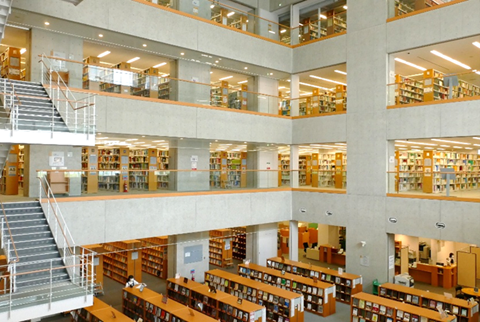
A Four-Story Atrium Space
[Read More]TOPIC 03「蓄積から発信へ――図書館60年の歩み――」(『アジア経済研究所60周年記念誌』より)TOPIC 03: From Collection Building to Information Dissemination— 60 Years of the Library (IDE 60th Anniversary Commemorative Publication) (in Japanese)
[Read More] アジア経済研究所図書館50年の歩み略年表 (特集 アジ研図書館五十年の足跡と未来 -- 蔵書構築・情報発信の課題) A Chronological Overview of Fifty Years of the IDE Library (Special Feature: The 50-Year History and Future of the IDE Library— Challenges in Collection Development and Information Dissemination) (Fusako Sugawara) (in Japanese)
[Read More] アジ研の50年と途上国研究 第10回 図書館と調査研究——鳥の両翼,車の両輪—— Fifty Years of the IDE and Development Studies, Part 10: Libraries and Research— Two Wings of a Bird, Two Wheels of a Cart (Shūsaku Matsumoto) (in Japanese)