

IDE Research Columns
Column
Understanding the Rise and Strains of Erdoğan’s Political Dominance in Turkey: From the Streetcar to the Presidential Convoy
Yasushi HAZAMA
Institute of Developing Economies, JETRO
April 2026
Why does a leader who cemented his political dominance through a centralized presidential system increasingly struggle to deliver economic stability and political confidence? This column, based on my latest book on Turkey’s Erdoğan administration, argues that the answer lies in the gradual erosion of what can be called “attraction politics.” For much of his rule, Erdoğan maintained dominance not through coercion but through a combination of economic performance, social protection, and narrative control. These pillars sustained broad public support for nearly two decades. Yet they rested on constitutional institutions. Once the centralized presidential system eroded these institutions, the three pillars no longer translated into effective governance.
In 1996, Recep Tayyip Erdoğan, then mayor of Istanbul, famously remarked that “democracy is like a streetcar: when you reach your destination, you get off.” Nearly three decades later, Turkey’s political trajectory appears to have moved far from the crowded streetcar of competitive politics toward something resembling a presidential convoy—fast-moving, highly centralized, and increasingly separated from the everyday traffic of society. For more than twenty years, Erdoğan has dominated Turkey’s political landscape, leading the Justice and Development Party (AKP) through an era of remarkable electoral success.
Yet this dominance presents a puzzle. The period in which Erdoğan accumulated unprecedented authority also coincided with growing policy failures, economic instability, and the first serious signs of electoral fatigue. Why does greater dominance fail to ensure government performance? This column argues that the answer lies in the gradual erosion of what can be called “attraction politics.” Attraction politics refers to the ways in which an incumbent party attracts voters through three pillars: economic performance, social policy, and narrative control.
For much of his rule, Erdoğan maintained dominance not through coercion but through a combination of economic performance, social protection, and narrative control. These pillars sustained broad public support for nearly two decades. Once these pillars were undermined by the introduction of a centralized presidential system, however, political dominance no longer translated into effective governance.
Economic Performance
The first pillar was economic performance. Following Turkey’s severe financial crisis in 2001, the early AKP governments oversaw rapid growth and macroeconomic stabilization. Between 2002 and 2007, income levels rose sharply, infrastructure expanded, and consumption increased. This period created a durable economic halo, shaping voters’ expectations well beyond the initial boom years.
As a result, the AKP benefited from long-term trust. Even when growth slowed or external shocks occurred—most notably during the 2008 global financial crisis—many voters continued to believe that Erdoğan’s leadership remained the safest option for economic management. Visible improvements in daily life reinforced this perception.
Social Policy
The second pillar was social policy. The AKP systematically expanded welfare provision, particularly for groups historically marginalized by the Turkish state. The introduction of universal health insurance in 2008 dramatically reduced inequality in access to medical services and integrated millions of citizens into formal social protection.
For low-income households, the elderly, widows, and rural populations, the state increasingly appeared as a reliable provider. This protection effect transformed political support into a relationship grounded in tangible benefits, rather than merely ideological alignment.
Narrative Control
The third pillar was narrative control. Erdoğan reframed Turkey’s long-standing center–periphery divide as a struggle between the “Black Turks”—religious and conservative citizens—and the “White Turks,” associated with secular state elites. This framing helped legitimize reforms, supported by a broad public, that strengthened government control over the military and judiciary.
Once the threat from the secular state elite receded, however, Erdoğan transformed his anti-elite discourse into a majoritarian discourse. Electoral victory itself came to be presented as the exclusive source of legitimacy, reducing the space for pluralism and dissent. Opposition actors and protest movements were increasingly depicted as unrepresentative and obstructive. Erdoğan’s majoritarian discourse thus encouraged voter polarization in order to consolidate his “majority” support base.
Institutional Decay after 2016
The failed coup attempt of July 2016 by Erdoğan’s former ally, the Gülen movement, marked a decisive institutional turning point. In its aftermath, the government used emergency powers to restructure the political system, culminating in the adoption of a presidential regime in 2017. This system concentrated executive authority to an unprecedented degree.
While the new arrangement promised efficiency and stability, in practice it reduced institutional checks and narrowed policy deliberation. Decision-making became increasingly personalized, with expertise subordinated to loyalty. Rather than strengthening governance capacity, this concentration of authority ultimately limited the system’s ability to make rational policy decisions.
Economic Performance and Social Policy in Retreat
The consequences became most visible in economic policy. Beginning in 2018, Turkey experienced repeated currency crises, rising inflation, and declining real incomes. Central to these developments was the sustained political pressure placed on monetary policy, particularly the insistence on low interest rates despite accelerating inflation.
This approach—often labeled “Erdoğanomics”—undermined economic management. As prices rose and wage hikes lagged behind inflation, the very social groups that had benefited most from earlier AKP policies began to experience the erosion of both the economic halo and the protection effect.
Electoral Signals of Fatigue
Erdoğan secured re-election in May 2023 by a margin of just four percentage points. This narrow victory owed much to a combination of pre-election fiscal expansion, belated wage increases, and national security narratives propagated through pro-government media. Erdoğan also succeeded in bringing radical-right parties into his governing coalition (Figure 1).
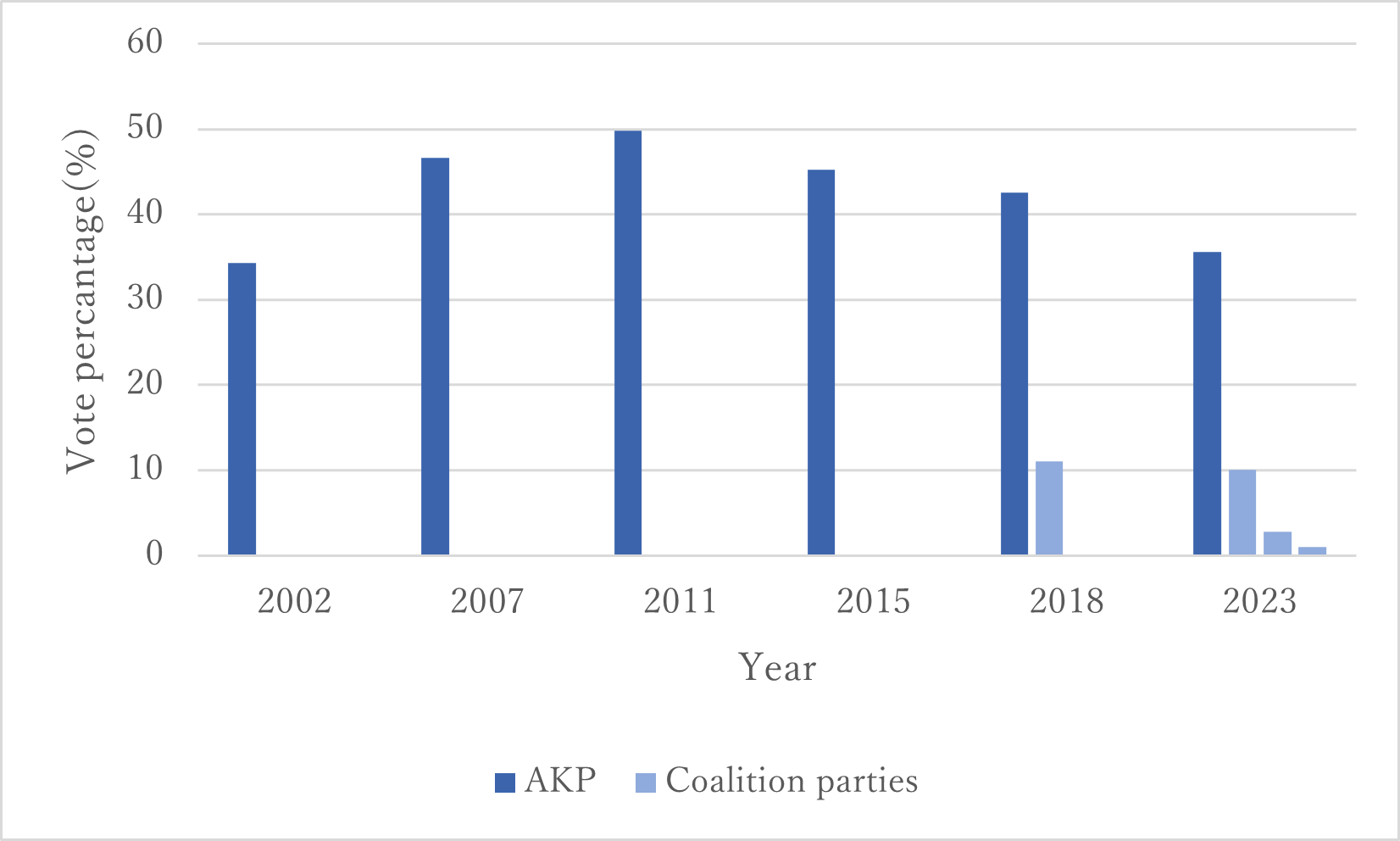
Figure 1. Vote for the AKP and Its Partners in Parliamentary Elections
Source: Author’s elaboration based on data from the Supreme Election Council website.
Yet the March 2024 local elections revealed a clear shift. The AKP lost control of major metropolitan municipalities and failed to regain Istanbul and Ankara. Economic exhaustion, dissatisfaction with post-earthquake reconstruction, and the departure of a radical-right party from the coalition all contributed to this outcome. For the first time, electoral dominance appeared structurally fragile rather than temporarily challenged.
The Limits of Dominance by Centralization
Turkey’s experience illustrates a broader political dynamic. Dominance based on attraction politics can sustain power for long periods, but it cannot easily be replaced by dominance based on institutional centralization. When institutional feedback weakens and policy errors accumulate, electoral support becomes increasingly volatile.
As Turkey moves toward future elections, the governing party faces a transformed political landscape. The convoy of the presidency continues to move forward—but without restoring economic credibility and institutional trust, it risks leaving behind the social coalition that once powered its rise.
Author’s Note
This column is based on Hazama, Yasushi. 2026. The Dynamics of Dominance in Erdoğan’s Turkey: The Politics of Attraction. Cheltenham, Edward Elgar.
Reference
Hazama, Yasushi. 2026. The Dynamics of Dominance in Erdoğan’s Turkey: The Politics of Attraction. Cheltenham, Edward Elgar.
Author's Profile
Yasushi Hazama is a senior researcher at the Institute of Developing Economies, Japan External Trade Organization. He received his Ph.D. in Political Science from Bilkent University, in Ankara, Turkey. His articles have appeared in Party Politics, International Political Science Review, Acta Politica, South European Society and Politics, and Turkish Studies.
* The views expressed in the columns are those of the author(s) and do not represent the views of IDE or the institutions to which the authors are attached.
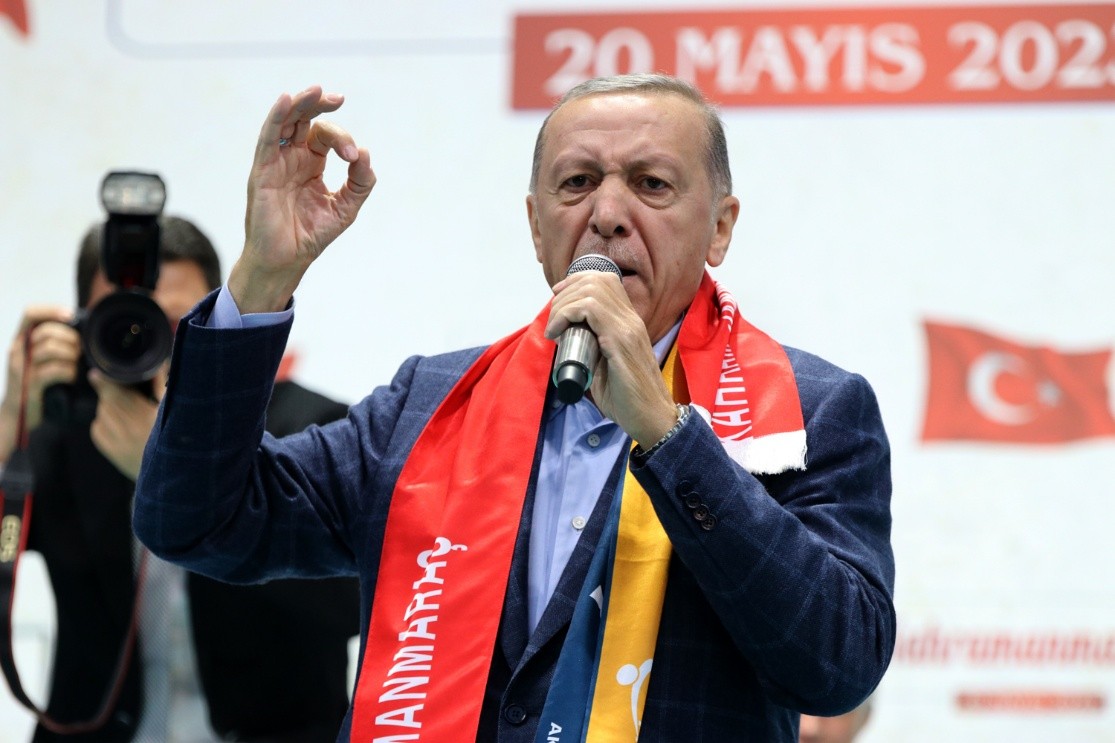
* Thumbnail photo: President Erdoğan during his 2023 May election campaign in quake-hit Kahramanmaraş Province. (by Orhan Erkılıç / Voice of America, via Wikimedia Commons (public domain))
©2026 Yasushi Hazama

This column is licensed under a Creative Commons Attribution 4.0 International license (CC BY 4.0). https://creativecommons.org/licenses/by/4.0/deed
Subscribe Stay updated with our latest columns!