
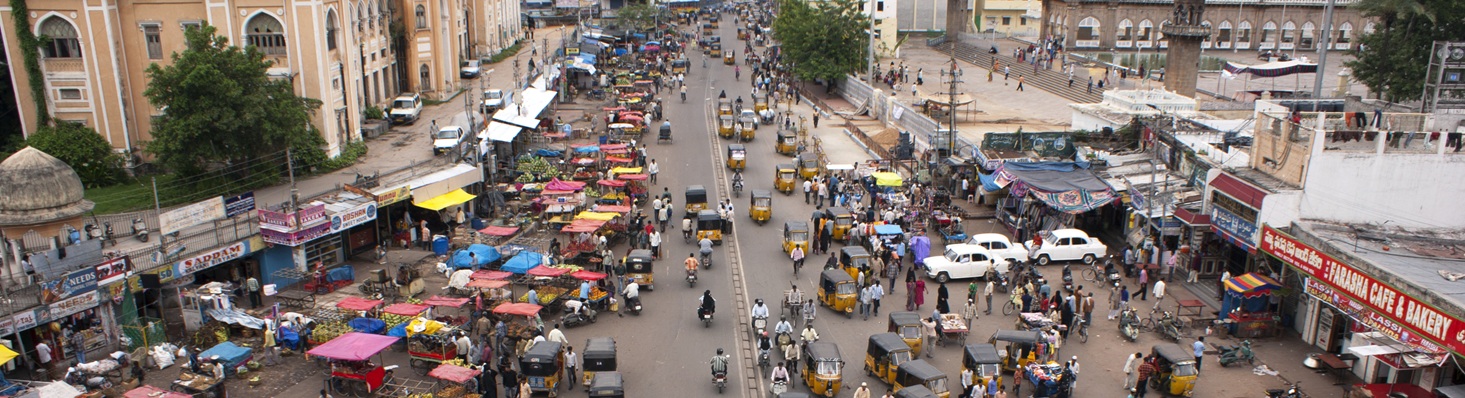
IDE Research Columns
Column
When School Exams Collide with the Harvest Timing
Abu S. SHONCHOY
Florida International University & J-PAL
February 2026
In many rural economies, families rely heavily on seasonal farm work, and children’s labor can be essential during peak agricultural periods. When schools schedule high-stakes examinations during these peak seasons, parents choose between keeping their children in school or sending them to the fields to secure household income— facing the difficult task of weighing the immediate benefit of their children's labor against the potential long-term gains of continued schooling. This study finds that when national school examinations coincide with the main harvest season, dropout increases sharply among children from agricultural households—predominantly among boys of secondary-school age. This research highlights a largely overlooked constraint in education policy: the timing of the school year matters as much as the structure of schooling itself.
Motivation
In many developing countries, rural households depend heavily on seasonal agricultural wage labor to earn income and meet basic consumption needs. During peak agricultural periods, particularly planting and harvesting seasons, credit-constrained households depend on family labor to manage time-sensitive tasks (Rosenzweig 1988). Children—especially boys—often help with agricultural production because of the higher wage during harvest (Bhalotra and Heady 2003). Unfortunately, school systems frequently schedule high-stakes, grade-promotion examinations without considering local seasonality (ADB 2017). When exam calendars overlap with agricultural peak seasons, families face a difficult trade-off: send children to school or allow them to work in the fields to secure household income. This raises an important question for policymakers: Can better-aligned school calendars improve student retention in agricultural regions?
Academic Calendars and Rural Economies
Most countries organize their academic calendars around administrative convenience or historic precedence. Yet interest in aligning education policies with local labor demand has grown, particularly in regions where poverty is seasonal. In Bangladesh, annual grade-promotion exams typically occur from late November to mid-December. Unfortunately, this timing directly coincides with the Aman rice harvest—the largest rice crop in the country. During this period, agricultural wages rise, households face labor shortages, and school-aged boys become especially valuable workers. However, working in the paddy field means missing valuable schooldays, getting tired, lacking exam preparation and even missing these exams— preventing grade progression and often leads to permanent dropout.
Despite widespread anecdotal evidence, rigorous estimates of how calendar design affects schooling in developing countries have been limited.
Bangladesh’s Ramadan-Induced Schedule Shift
Our Recent Study (Ito and Shonchoy 2026) exploits a natural experiment arising from the fact that Ramadan follows a lunar calendar and shifts approximately 11–12 days earlier each year. Between 1999 and 2001, Ramadan fell in December. To avoid scheduling exams during religious holidays, Bangladesh’s Ministry of Education moved final exams into November—reducing overlap with the harvest. By 2002, Ramadan shifted into November, and exams returned to December, re-introducing the conflict.
Using child-level longitudinal data from rural Bangladesh collected in 2000 and 2003, our study compares changes in enrollment for children from agricultural households with those from non-agricultural ones. Additional nationally representative survey data of Bangladesh titled Household Income and Expenditure Survey (HIES) 2016-2017 allow examination of longer-term educational attainment.
Results of the Evaluation
The main findings are as follows. When exams overlapped with the harvest in 2002, school continuation among children from agricultural households declined by approximately 6.6 to 9.0 percentage points, relative to a baseline dropout rate of 25 percent for non-agricultural households. The effects were concentrated among secondary-school-aged boys, who perform physically intensive tasks during the harvest. In contrast, girls’ dropout rates changed little, consistent with gendered labor patterns in agriculture.
The study also finds that children who remained enrolled progressed more slowly through grades when exams and harvests overlapped. This suggests reduced study time and weaker exam performance. Importantly, when national schedules temporarily avoided the harvest (1999–2001), dropout fell, and children subsequently accumulated more schooling. Cohort analysis conducted more than a decade later indicates higher rates of primary, secondary, and higher-secondary completion, which leads to more human capital accumulation and possible higher income.
External Validity: Complementary Evidence from India
India provides a useful comparison. Unlike Bangladesh, India’s school calendars are set at the state level and harvest calendars vary by crop. In some states (e.g., Madhya Pradesh), final exams overlap with harvest. In others (e.g., Bihar), they do not. Using India Human Development Survey (IHDS), we find similar negative impacts of exam-harvest overlap among agricultural households, suggesting this issue is not unique to Bangladesh.
Discussion
These results underscore an often-overlooked aspect of education policy: careful design of academic calendar. Even without new infrastructure, teacher training, or subsidies, adjusting exam dates in rural regions can meaningfully reduce school dropouts. However, several caveats apply. First, implementing geographically differentiated calendars may pose administrative challenges, particularly in centralized education systems. Second, policymakers must consider cultural holidays, climate variability, and regional crop cycles simultaneously. Third, while the long-run wage gains (returns to education) are positive, they are modest, suggesting that calendar alignment should complement rather than replace other policy interventions. Nonetheless, the evidence indicates that school calendar reforms can help children remain enrolled when families need them most—an import policy lessons for countries struggling to increase school continuation for secondary education, particularly in the rural areas of developing countries.
Author’s Note
This column is based on; Ito, Seiro, and Abu S. Shonchoy. 2026. “Seasonality, Academic Calendar and School Dropouts in South Asia.” Journal of Development Economics 179, February, 103649.
References
ADB. 2017. Bangladesh Education Sector Review. Manila: Asian Development Bank.
Bhalotra, S., & Heady, C. 2003. “Child Farm Labor: The Wealth Paradox.” World Bank Economic Review 17(2): 197–227.
Ito, Seiro, and Abu S. Shonchoy. 2026. “Seasonality, Academic Calendar and School Dropouts in South Asia.” Journal of Development Economics 179, February, 103649.
Rosenzweig, M. 1988. “Labor Markets in Low-income Countries.” Handbook of Development Economics 1: 713–762.
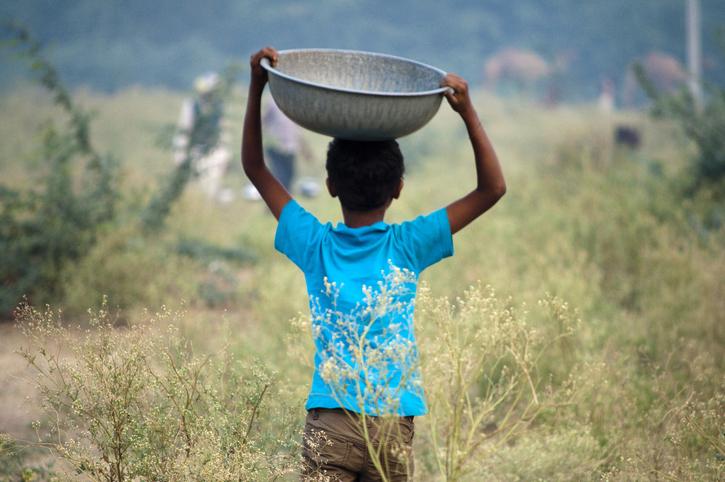
* Thumbnail image: A little boy carrying a steel tub over his head in Pushkar, Rajasthan, India. (Moment Open / Getty Images)
**The views expressed in the columns are those of the author(s) and do not represent the views of IDE or the institutions to which the authors are attached.
©2026 Abu S. SHONCHOY

This column is licensed under a Creative Commons Attribution 4.0 International license (CC BY 4.0). https://creativecommons.org/licenses/by/4.0/deed