

IDE Research Columns
Column
Gender and Career Choice in Rural Philippines: A Youth Perspective
Melisa M. FABELLA, Mai SEKI and Makoto KAKINAKA
Ritsumeikan University; Gakushuin University; Ritsumeikan University
June 2026
Career decisions are often seen as personal choices, yet in societies shaped by strong family ties and traditional norms, they are rarely made alone. This column presents how young Filipinos perceive career decision-making autonomy when personal aspirations conflict with parental advice. Using an experimental vignette survey with 1,174 university students, participants evaluated whether a hypothetical son or daughter appeared autonomous when choosing a career despite parental pressure. Results reveal a consistent pattern: daughters were perceived as more autonomous than sons. The findings point to the importance of fostering gender-balanced autonomy in career decision-making.
Career decision-making isn’t just about picking a job. For many young people everywhere, choosing a career is one of the first big steps into adulthood – a young person’s sense of autonomy, identity, opportunity, and fairness. In wealthier, urban settings, career options are more diverse, and cultural norms are less restrictive (Glackin 2015; Shea et al. 2007). But in many developing country contexts, particularly in rural settings, young people’s choices are shaped by culture, gender, family expectations, and the communities those youths call home.
Why This Matters
In collectivist cultures like the Philippines, family relationships play a central role in major life decisions. Parents are deeply involved in guiding their children’s futures. That involvement can be supportive, but it can also limit how freely young people feel they can act on their own preferences. Although previous studies offer a strong understanding of the economic, social, and psychological factors influencing career choices among Filipino youth (Datu 2013; Digamon and De La Peña 2021; Salazar-Clemeña 2002), they rarely examine how gender affects career choice autonomy itself.
This gap matters. Career choice autonomy is not just about what options exist, but about who feels entitled to choose. In family-oriented settings, where parental authority and traditional values are strong, career decisions can be sensitive, particularly when expectations differ for young men and young women. Yet career choice is often treated as a practical issue rather than a relational one, leaving questions of autonomy underexamined. This assumption overlooks how deeply personal and gendered these decisions can be in family-centered societies.
The study discussed here addresses that gap by focusing on how young people perceive autonomy in career decision-making within a rural Philippine context, offering insight into how gender, culture, and family dynamics interact.
What the Experiment Found
Our experimental study (Fabella, Seki, and Kakinaka 2025) was designed to examine how people perceive career decision-making autonomy. In this study, perceived career choice autonomy is framed as whether a young person is seen as able to recognize and pursue their desired career path despite the parental nudge. We used short vignettes or hypothetical scenarios describing a young adult whose preferred career conflicted with parental advice.
To examine how gender dynamics shaped these perceptions, we varied both the parent and the child in the scenario. Specifically, we tested four gender pairings: mother-daughter, father-son, mother-son, and father-daughter. This allowed us to observe whether perceptions of autonomy shifted depending on who was giving the advice and whether the child was a son or a daughter. Respondents were asked to evaluate how autonomous the young person appeared in navigating that disagreement.
We then analyzed whether perceptions of autonomy varied depending on the child’s gender in the scenario and on the characteristics of the respondent themselves. A consistent pattern emerged: the daughter character was more likely to be perceived as autonomous than the son. This perception was particularly strong among (1) male respondents, (2) those who reported having a close relationship with their mothers, (3) those who did not strongly prioritize pleasing family members, and (4) those who expressed more liberal views. These findings suggest that judgments about autonomy are shaped not only by gender but also by the values and relationships of the observers themselves.
Overall, our study underscores the value of using specific, relatable scenarios to understand parent-child dynamics around career choice. Rather than asking abstract questions about gender equality, examining concrete situations reveals how traditional norms and family expectations operate in everyday life.
Key Takeaways
Understanding career decision-making requires looking not only at economic conditions or available opportunities, but also at gender and family dynamics. In multiple vignette scenarios, young respondents perceived sons as less able than daughters to deviate from parental suggestions and pursue a desired career path. Our findings suggest that perceptions of autonomy can differ subtly between sons and daughters, even within the same cultural context. This also points to limits on young men’s freedom to pursue preferred careers, as perceived by the youth.
In the Philippines, a country known for its strong advocacy of gender equality, fostering career choice autonomy across genders is essential. In some settings, social norms may constrain choice while still directing individuals into economically advantageous roles. Yet enabling voluntary, informed career decisions for all young people remains a worthwhile aim.
Authors' Note
This column is based on Fabella, Melisa, Mai Seki, and Makoto Kakinaka. 2025. “General Perceptions of Career Decision-Making Autonomy Among Youth in Rural Philippines: An Experimental Study Examining Cultural and Gender Dynamics.” The Developing Economies 1–21. https://doi.org/10.1111/deve.12453.
Note
In this column “autonomy” refers specifically to perceived career-choice autonomy as the perceived ability of a young person to pursue their preferred career path despite parental or social pressure — not to broader measures of social or political empowerment.
References
Datu, J. A. D. 2013. “Perfectionism and Career Decidedness of Filipino College Students.” International Journal of Research Studies in Education 2 (4): 3–12. https://doi.org/10.5861/ijrse.2013.493
Digamon, J., and J. N. De La Peña. 2021. “Attitudes of Senior High School Students Towards Career Decision Making.” JPAIR Institutional Research 16 (1): 72–89. https://doi.org/10.7719/irj.v16i1.617
Fabella, Melisa, Mai Seki, and Makoto Kakinaka. 2025. “General Perceptions of Career Decision-Making Autonomy among Youth in Rural Philippines: An Experimental Study Examining Cultural and Gender Dynamics.” The Developing Economies 1–21. https://doi.org/10.1111/deve.12453
Glackin, S. 2015. “Contemporary Urban Culture: How Community Structures Endure in an Individualised Society.” Culture and Organization 21 (1): 23–41. https://doi.org/10.1080/14759551.2013.795153
Salazar-Clemeña, R. M. 2002. “Family Ties and Peso Signs: Challenges for Career Counseling in the Philippines.” The Career Development Quarterly 50 (3): 246–256. https://doi.org/10.1002/j.2161-0045.2002.tb00900.x
Shea, M., P.-W. W. Ma, and C. J. Yeh. 2007. “Development of a Culturally Specific Career Exploration Group for Urban Chinese Immigrant Youth.” The Career Development Quarterly 56 (1): 62–73. https://doi.org/10.1002/j.2161-0045.2007.tb00020.x
First Author's Profile
Melisa M. Fabella is a Senior Researcher at the Ritsumeikan University BKC Social Sciences Research Organization. Her research examines labor markets, gender, social norms, and inclusion in the Philippines, with particular attention to how cultural and institutional contexts shape individual choices and socioeconomic outcomes. She uses survey experiments, conjoint analysis, and econometric methods to study career decision-making, workplace perceptions, and socioeconomic inequality.
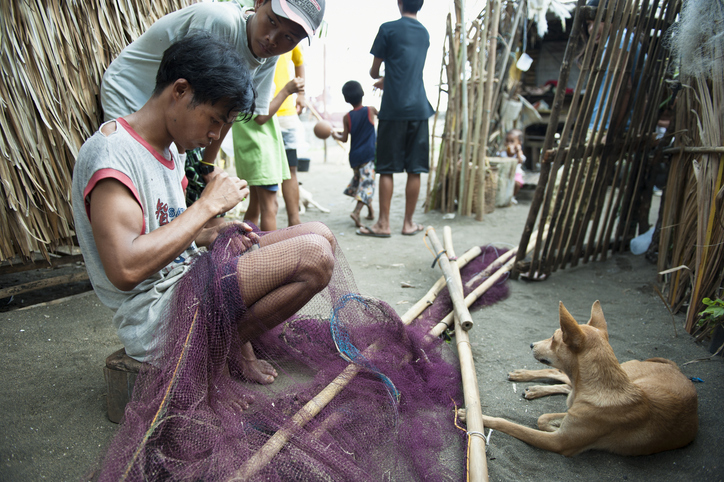
* Thumbnail photo: Fisherman preparing his sudsud net (Jacob Maentz / Getty Images)
** The views expressed in the columns are those of the author(s) and do not represent the views of IDE or the institutions to which the authors are attached.
©2026 Melisa M. FABELLA, Mai SEKI and Makoto KAKINAKA.

This column is licensed under a Creative Commons Attribution 4.0 International license (CC BY 4.0). https://creativecommons.org/licenses/by/4.0/deed
Subscribe Stay updated with our latest columns!