

IDE Research Columns
Column
The Smile Curve of Technological Learning: the Case of China’s Nuclear Power Reactor Technology

Wenyin CHENG
Asian Development Bank
Institute of Developing Economies, JETRO
May 2026
Although technological progress is driven by technological learning derived from domestic and foreign knowledge sources, the dynamic interaction between the two principal learning modes—learning by doing (domestic sources) and learning by importing (foreign sources)—remains insufficiently understood, despite their crucial influence on a country’s transition from duplicative imitation to creative imitation and eventually to innovation. Drawing on an embedded case study of China’s successful catch‑up in nuclear power reactor technology, we identify a “smile curve” in the evolution of technological learning, wherein the relative significance of learning by doing and learning by importing follows a U-shaped trajectory. Furthermore it shows that intangible (e.g., talent acquisition) and tangible (e.g., equipment) components of learning by importing exhibit the same smile curve pattern. These findings provide potential solutions for latecomers to overcome technological catch-up challenges through sequence learning strategies.
Dual Challenges to Technological Catch-up
Globalization has long been a critical enabler of technological catch-up for latecomer countries by facilitating access to foreign knowledge and capabilities. However, it may also result in dependence of latecomers on external technologies.
In recent years, the global shift toward deglobalization and heightened technology protectionism has introduced significant constraints on this catch-up model. For example, United States export controls on certain emerging technologies have been applied to several trading partners.
Consequently, developing economies are increasingly compelled to reorient their innovation strategies toward domestic sources of technological knowledge. This dual challenge pressure—technological dependence on the one hand and rising protectionism on the other—poses a fundamental challenge to sustain technological advancement. China is rapidly closing the technological gap with developed countries, and nuclear power reactor technology (NPRT) is one of its most notable achievements. It is the first nation to report the successful grid connection of a Generation IV NPRT1, and its domestically developed Generation III NPRT has been successfully exported to multiple countries. This study therefore examines how China’s NPRT has navigated these dual challenges and advanced technological catch-up through distinct pathways of technological learning.
Proposed Solution for Technological Catch-up
Building on insights from studies of technological learning (Cheng et al., 2024; Lee, 2024) and theories of developmental stages (Rostow, 1960; Marozau et al., 2021), this study proposes a “smile curve” of technological learning to explain China’s catch-up trajectory. The term “smile curve” has been popularized to illustrating the value-added contributions at different manufacturing production stages. However, the concept gets repurposed here to refer to the evolution of learning mechanisms across different technological development stages.
Figure 1 illustrates this framework, tracing the co-evolution of two distinct learning mechanisms across innovation stages, including duplicative imitation, creative imitation, and innovation. The framework emphasizes the dynamic interaction between these mechanisms and how their relative significance shifts across the three stages of technological development. It derives two key propositions, each of which is empirically supported by the evidence presented in subsequent sections.
Proposition 1: The relative significance of “learning by doing” compared with “learning by importing” exhibits a smile curve relationship across the three stages of technological development. Proposition 2: For learning by importing, the relative significance of intangible technologies compared with tangible technologies exhibits a smile curve relationship across the three technological development stages.
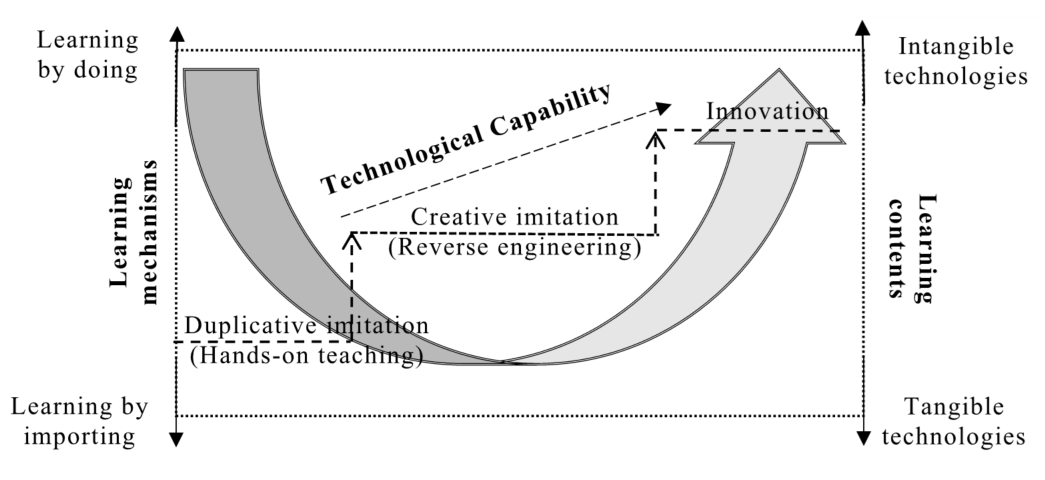
Figure 1. Smile Curve of Technological Learning
Source: drawn by the author
Two Technological Learning Smile Curves
Using a combination of interview-based exploratory methods and quantitative analysis, an embedded case study was conducted focusing on the NPRT learning process in China, characterized by clear stage-specific characteristics. The case is structured into three layers and four dimensions, enabling literal and theoretical replication at the implementation level. Specifically, the primary unit of analysis is NPRT itself, the secondary units of analysis are the four main stakeholders involved. The lowest unit of analysis is individual nuclear power units. Technology generation and technological patterns vary across different nuclear power units and among the stakeholders, providing a rich context for examining the dynamics of technological learning.
First, the relative importance of learning by doing compared with learning by importing exhibits a smile curve relationship across the three stages. This is evidenced by the trajectory of the indigenization rate, measured by the proportion of expenditure allocated to domestic machinery and equipment, which forms a smile curve with NPRT’s development progression. Specifically, the relative emphasis on learning by doing versus learning by importing is strong in the duplicative imitation and innovation phases but diminishes during the creative imitation phase.
Second, regarding learning by importing, the relative significance of intangible technologies compared with tangible technologies also exhibits a smile curve relationship across the three stages. At the duplicative imitation stage, the indigenization rate of China’s domestically developed Generation I NPRT, which started in 1985, reached as high as 70%, implying minimal reliance on foreign tangible technologies. At this stage, the focus was on importing talent, documents, and other forms of intangible knowledge. These intangible assets enabled hands-on teaching, effectively facilitated building, and initiated technological self-reliance.
As China’s NPRT transitioned to the creative imitation stage, the emphasis shifted toward imports of tangible technologies such as technical equipment and raw materials, leading to a decline in the indigenization rate. Generation II and III NPRT imports exemplify this trend. The indigenization rate of China’s domestically developed Generation II NPRT (M310+) dropped to as low as 30%. Furthermore, having established a foundational understanding in the duplicative imitation stage, the need for external intangible knowledge diminished, as China had developed sufficient absorptive capacity to undertake reverse engineering.
The innovation stage signifies a return to the importance of intangible knowledge. When innovation becomes the key focus, direct imitation becomes less relevant. The indigenization rate of China’s domestically developed Generation III and IV NPRT reached 87% and 93.4%, respectively. Nevertheless, intangible knowledge imports remain critical. Collaborations such as that between Tsinghua University and the Jülich Nuclear Research Center in Germany illustrate this continued reliance on global scientific knowledge to fuel domestic innovation.
Policy Recommendations
Based on the findings, the following policy recommendations to support and accelerate technological catch-up are provided. While potentially applicable to other developing economies, caution is required when applying these recommendations to other country–sector contexts, as they are derived from a single-case study of China’s NPRT.
First, strengthening the role of learning by doing and raising the indigenous content rate are critical for overcoming technological dependence, particularly when sectors transition from creative imitation to innovation. Prolonged reliance on learning by importing may support short-term economic growth through technology adoption, but ultimately weakens effective technology absorption and increases vulnerability to advanced economies’ technology protection measures.
Second, a heightened focus on importing intangible technologies should be pursued during the innovation phase, given the limited availability of existing tangible technologies for imitation. Furthermore, in an era marked by escalating trade and technological protectionism, intangible technologies offer a strategic advantage and are less susceptible to protectionist constraints than tangible assets, thereby warranting increased emphasis.
Author’s Note
This column is mainly based on: Cheng, W., Z. Li., J. Chen, B. Meng, and M. Ye. 2025. “Smile Curve of Technological Learning: A Case Study of Nuclear Power Reactor Technology in China.” Industrial and Corporate Change 34(5): 957-976.
Note
- Visit the following link for an explanation of the evolution of nuclear power: https://www.amacad.org/publication/nuclear-reactors-generation-generation/section/5
References
Cheng, W., B. Meng, Y. Gao, and D. Dollar. 2024. “The Paradox of Decelerated Technology Importation and Accelerated Innovation in China: Insights from National Technology Development Zones.” China Economic Review 88 (December), 102303.
Lee, K. 2024. Innovation–Development Detours for Latecomers: Managing Global-Local Interfaces in the De-Globalization Era. New York: Cambridge University Press.
Marozau, R., M. Guerrero, and D. Urbano. 2021. “Impacts of Universities in Different Stages of Economic Development.” Journal of the Knowledge Economy 12(1): 1-21.
Rostow, W. W. 1960. The Stages of Economic Growth: A Non-communist Manifesto. New York: Cambridge University Press.
Author's Profile
Wenyin CHENG is an Economist at Asian Development Bank and Associate Senior Researcher at Institute of Developing Economies (IDE-JETRO). His primary research focuses on global value chains (GVCs), productivity, and innovation. See his personal website for more information: https://wenyincheng.org/
* Thumbnail photo taken by the author
** The views expressed in the columns are those of the author(s) and do not represent the views of IDE or the institutions to which the authors are attached.
©2026 Wenyin CHENG

This column is licensed under a Creative Commons Attribution 4.0 International license (CC BY 4.0). https://creativecommons.org/licenses/by/4.0/deed
Subscribe Stay updated with our latest columns!