
IDEAS
Message from IDEAS alumni

Ignitious Phoku, Class of 2025/2026
Programme Officer, Invest SA Investment and Spatial Industrial Development Branch, Department of Trade, Industry and Competition (the dtic), South Africa
What drew me to the IDEAS programme was a combination of professional necessity and honest self-awareness. Working in an industrial policy environment, I operate at the intersection of investment promotion, trade and export facilitation. I believed I understood South Africa’s constraints well, but much of my thinking had been shaped by local policy debates and assumptions about development. I had never rigorously tested those assumptions against how other economies had confronted, and in some cases overcome, similar challenges.
The Japanese and broader Asian industrialisation experience appealed to me because of its deliberateness. The Asian experience provides a rich set of contexts in which industrialisation has unfolded, offering varied examples shaped by different institutional, geographic and political realities. IDE-JETRO stood out for grounding research in real developmental questions. Joining IDEAS felt less like returning to school and more like entering a conversation I had long been seeking.
What I underestimated was how demanding that conversation would be. The programme required intellectual rigour that left no room for familiar narratives. Prof. Makino’s sessions on causal inference were particularly instructive, which were a disciplined insistence on following the data, even when conclusions are inconvenient. The lively class discussions that complemented the lecturers’ delivery reinforced this, as ideas were constantly tested and refined in real time. In policy environments where narratives often outpace evidence, this was a necessary corrective.
Some of the most valuable learning happened outside the lecture room. Conversations with peers often extended into leisure time, on the streets of Shinjuku or on train rides into Tokyo. A fellow from Japan challenged my assumptions about affirmative action and redress in South Africa, forcing me to confront tensions I had previously sidestepped. Another, from Côte d’Ivoire, and I found ourselves in repeated disagreement over development finance imperatives; each convinced the other was missing something fundamental. In retrospect, we were both right.
Equally memorable was a conversation with colleagues from Pakistan and Zambia on climate change and the circular economy which centred on an incineration plant that generates electricity while producing usable by-products. What began as a technical discussion opened into deeper questions about trade-offs between sustainability, affordability and political feasibility.
The diversity of the cohort further unsettled my assumptions. Fellows from Laos and Bhutan approached policy from constraints shaped by the constitution of their geographies, small populations, “landlockedness” and unique industrial bases. Even my understanding of what constitutes a country shifted when colleagues from Indonesia and the Philippines spoke about governing thousands of islands across vast maritime territories.
I left the programme more rigorous, more reflective and more aware of the limits of my own knowledge. IDEAS sharpened my ability to assess what translates across contexts, what does not, and why. I would recommend it to anyone willing to be challenged. It is a formative experience, both professionally and personally. In sum, the combination of worldclass lecturers/researchers, diverse fellows as well as a supportive secretariat made the programme incomparable to other experiences I have had in the past.

Hannah Jamaign R. Barroquillo, Class of 2025/2026
Supervising Investments Specialist, Philippine Board of Investments
My experience as a Fellow under the IDEAS-Training Program of IDE-JETRO has been both enriching and transformative. The program deepened my understanding of development concepts and provided valuable insights into the diverse development strategies adopted by emerging and developing economies. Through the lectures, discussions, and collaborative learning environment, I gained a broader appreciation of how policy, governance, and investment promotion can be tailored to address different national and local contexts.
One of the most meaningful aspects of the program was the opportunity to learn alongside representatives from various countries. Engaging with fellows from different backgrounds allowed me to better understand the unique challenges and opportunities faced by developing economies, while also exposing me to innovative and practical approaches to investment promotion and economic development. These exchanges encouraged a more collaborative and globally informed perspective that I can apply in my professional work.
Beyond the classroom, living in Japan allowed me to experience firsthand the tangible results of long-term development, effective governance, and strong public institutions. From efficient public transportation systems to orderly urban planning and community-oriented services, I was able to observe how development policies translate into everyday life and improve the welfare of people. This made the learning experience more meaningful, as we were not only studying development theories and strategies academically, but also witnessing their impact in practice.
The study visit to the Chiba Prefectural Government was particularly inspiring, as it demonstrated effective local governance practices and strategies for regional development and investments facilitation. The experience opened new ideas and possibilities that I hope to adapt in working with local government units in the Philippines, particularly in promoting ease of doing business and strengthening local investment ecosystems.
Another valuable aspect of the program was the camaraderie and strong network formed among the fellows. Despite coming from different countries and professional backgrounds, our batch developed lasting friendships and meaningful professional connections that continue even after the program. We remain active in communicating with one another, supporting each other’s initiatives, and some of us have even traveled together in other countries after the program. I believe this reflects one of the important goals of the IDEAS-Training Program: fostering not only academic learning, but also international understanding, cooperation, and enduring partnerships among future development leaders.
I am sincerely grateful to IDE-JETRO for this invaluable opportunity. The program has not only enhanced my professional knowledge and perspective, but has also strengthened my commitment to contributing to inclusive and sustainable development in the Philippines. I highly encourage future applicants and development practitioners to join the program, as it offers a unique opportunity for both professional growth and meaningful international engagement that extends far beyond the duration of the training itself.

Kamolwan Gaviratanathana, Class of 2024/2025
Policy Analyst, Department of International Trade Promotion, Ministry of Commerce, Thailand
Title of Thesis: “The Role of Industrial Policies in the Development of SMEs: A Case Study of Thailand’s Design Industry”
※ Excellent Paper in the IDEAS Training Program 2024/2025
Participating in the IDEAS Program was a profoundly enriching experience that transformed both my academic outlook and professional aspirations. Coming from a non-economics background, I initially approached the program with a mixture of curiosity and uncertainty. However, the well-structured curriculum and supportive environment empowered me to grasp complex economic and policy concepts with confidence. The coursework not only provided foundational knowledge in development economics but also encouraged fellows to think critically, speak thoughtfully, and engage in meaningful discussions.
One of the most memorable aspects of the program was the one-month training in Japan. Through field visits to JETRO Headquarter and government institutions, classroom learning was brought vividly to life. These hands-on experiences gave me a deeper appreciation for how policy is implemented in practice and how cultural context shapes development strategies. The IDEAS Secretariat and IDE-JETRO supervisors were also instrumental in making the program so impactful. Their exceptional support ensured that each fellow could thrive. They created an inclusive and collaborative learning environment that encouraged growth, dialogue, and international friendship.
Equally unforgettable was the bond I formed with fellow participants from across Asia, Africa, and Japan. Despite our diverse backgrounds, we connected through shared experiences, mutual respect, and a commitment to understanding global development challenges. These friendships and exchanges broadened my perspective and continue to inspire me both personally and professionally.
To future participants, especially those without an academic background in economics, I encourage you to approach the IDEAS Program with openness and determination. Engage actively, ask questions, and embrace every opportunity to learn and connect. This program is not only an academic experience, but also a transformative journey that will expand your worldview and empower your career path in meaningful ways.

Tomoya Fujii, Class of 2024/2025
Deloitte Touche Tohmatsu LLC
Title of Thesis: “Leveraging Digital Technology for Fiscal Health in Africa”
In my previous role, I worked as an Investment Analyst at the UNCDF (United Nations Capital Development Fund) Zambia. During that time, a software provider approached us with a proposal to explore the use of cloud-based SaaS solutions to improve domestic tax revenue in Zambia. Having previously spent about five years in a startup company working on business development for SaaS products, I found the initiative personally compelling. However, due to the limited duration of my assignment, the discussion ended prematurely, and I was left with a sense of unfinished business. When I later came across the IDEAS program, I saw it as a valuable opportunity to further explore how technology can contribute to improving fiscal conditions in Africa, and that motivated me to enroll.
In the thesis track, each student was assigned an academic advisor who provides frequent guidance on the direction of the thesis. Thanks to this, I received valuable advice ranging from the basic principles of academic writing to more advanced input on how to refine the content of my thesis. Additionally, I had the opportunity to speak online with several local cloud service vendors, through which I learned about successful cases in countries like Uganda and Ghana. These discussions gave me a clearer picture of the practical potential for applying SaaS systems on the ground.
I had the opportunity to connect with research fellows from a wide variety of countries. There were occasions for group work as well as regular, informal communication. Although I was often busy with my primary job during the day, conversations with fellow IDEAS participants provided a refreshing and meaningful break.
In my current role, I primarily work on government-related projects, including Official Development Assistance (ODA). Many of these projects are digital in nature, which directly aligns with efforts to expand digital technologies in developing countries. When writing my thesis, I did not limit my focus to a single African country—instead, I began by conducting a systematic cross-country analysis of digital trends. This approach has also laid the foundation for providing macroeconomic advisory support when assisting companies with their market entry into Africa.
I believe this program is particularly well-suited for those aspiring to pursue careers in international cooperation or research roles related to global affairs. The faculty members are highly knowledgeable in their respective fields, making it easy to receive precise and insightful feedback during class discussions. For those seeking to deepen their expertise, this program offers an excellent environment for further learning.
Sanya Dua, Class of 2023/2024
Research Associate, Indian Council for Research on International Economic Relations (ICRIER), New Delhi, India
The IDE Advanced School Training Program FY2023 offered a comprehensive curriculum in International Economics and Socio-Economic Development. The program including almost a month’s visit to Japan was an unforgettable experience, both for professional learning and personal growth.
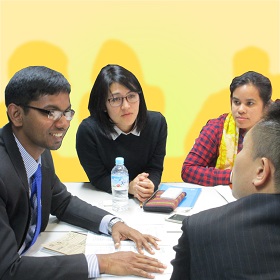
The diverse cohort of participants from 14 countries and fellows from Japan enriched the learning experience and provided ample networking opportunities, so much so that I am still in constant touch with some of the fellows. The program gives a peer-to-peer learning platform which is meaningful, allowing for discussions on economic and trade issues faced by developing countries and learning outcomes of a developed country like Japan. Coming from a trade and development economic research background, completing this program is like an upward learning curve, providing a clear direction for my future career goals. The focus on topics like Causal Inference in research and international trade, especially in the Asia-Pacific region, was extremely beneficial.
A highlight of the program was the invaluable opportunity to interact with the president of JETRO, gaining insights into Japanese investment strategies, and to interact with officials from the Ministry of Economy, Trade, and Industry (METI) in Japan. Also, the workshop on JICA and Second-hand Goods Trade provided practical learning experiences. One unforgettable aspect was the visit organized to Ichihara High School. Here, I had the privilege of interacting with Japanese high school students and sharing facets of Indian culture. This visit not only allowed me to forge connections with the local community but also offered a profound understanding of Japan's education system and the infrastructure of schools, particularly in the outskirts of Chiba city.
The IDEAS faculty and the special speakers in the online lectures, coming from diverse backgrounds and prestigious universities, enhanced the learning experience. The faculty and admin staff of IDEAS was very responsive and approachable. Access to the e-library and the world-class library in the institute’s campus was extremely valuable.
The intensive report writing and group presentations were interesting. The faculty's feedback was good, enhancing my understanding and skills. The bonds formed with fellow participants are cherished, and the exposure to different cultures was enriching. The supportive Japanese fellows made the rigorous lectures enjoyable and even organized outings to explore Tokyo on the weekends.
Knowing about the Japanese culture was truly the icing on the cake. This experience personally enriched my daily life, influencing my conduct both at work and within society.
My message to the prospective participants of the IDEAS program is that the program offers a platform for peer-to-peer learning and hands-on experience, making it ideal for mid-career professionals in policy, development, or academia. The support from IDEAS Secretariat, faculty, and JETRO New Delhi officials was commendable. The transportation and accommodation arrangements at Makuhari International Training Centre were more than satisfactory. These are things that the future fellows should be least worried about. I surely recommend the IDEAS course in International Studies to future applicants seeking academic, professional, and personal growth. It provides the necessary push to contribute effectively in one's field of work related to policy research and fosters career development.
K.K. Sandun Sameera, Class of 2023/2024
Assistant Director of Commerce, Department of Commerce, Sri Lanka
(Former Commercial Attaché/ Sri Lanka Consulate General in Mumbai)
The IDEAS training programme offered by the Institute of the Developing Economies- Japan External Trade Organization (IDE-JETRO) is an intensive course on international trade & investment, finance and socio-economic development issues facing developing countries. The multidisciplinary nature of the course provides the participant with a holistic view on how various factors influence the social and economic development of a country. As a government official involved in policy matters on international trade, I personally found the subjects taught and the assignments completed were of direct relevance to my work. The course teaches the participants how to come up with well-informed policy decisions relying on real data and research rather than making decisions based on popular sentiments. I really enjoyed learning concepts such causal inference, identifying and establishing correlations which were applied during our group assignment to refute arguments on economic policies.
Furthermore, I also found the classroom atmosphere during this course was very conducive for advanced learning. The teachings were delivered by leading international and Japanese professors who are well accomplished in their respective subject areas. Apart from the quality of the lecture panel, what make this course a truly international experience is due to the diversity of the group of participants. Each and every participant had their own views based on their country specific experiences and engagements in their respective duties. Participants were free to express themselves at any time and the lecturers promoted active dialog during the lessons. It allowed us to share more experiences and consider the same development issues facing our countries in multiple perspective. During the course of the programme, participants got a wonderful opportunity to get to know other fellows very closely and it led to formation of very strong bonds between us which we carry forward even after the expiry of the course.
Finally, I would like to recommend this programme to anyone who is interested in pursuing higher studies in development issues in an international environment under the guidance of renowned experts.